
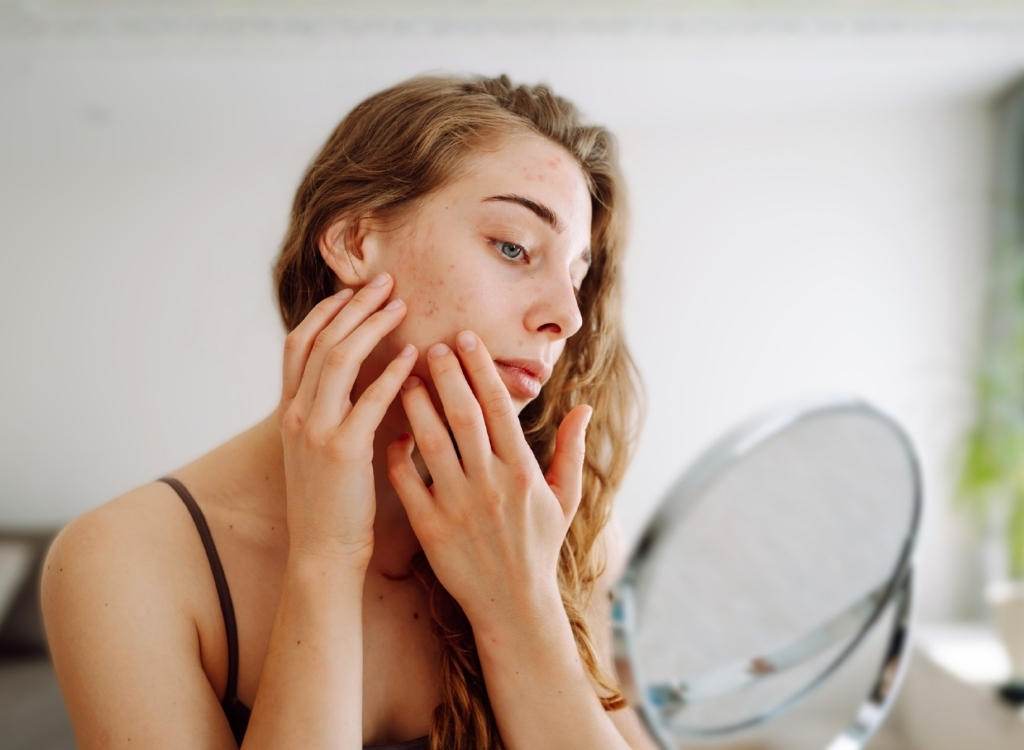
Rosacea is more than just a cosmetic concern. It is a chronic inflammatory condition with roots that often run deeper than the skin. Understanding the triggers and the internal drivers is the first step toward lasting control.
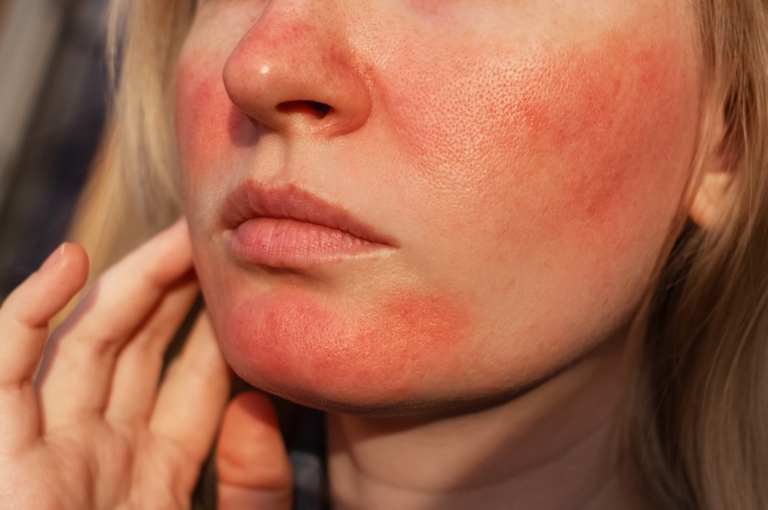
Acne Rosacea is a chronic inflammatory skin condition that affects an estimated 16 million Americans and more than 415 million people worldwide. It is characterized by persistent facial redness, visible blood vessels, acne-like bumps, flushing episodes, and skin sensitivity, most commonly across the cheeks, nose, chin, and forehead. For many patients, rosacea is more than a cosmetic annoyance. It can cause significant physical discomfort, emotional distress, and a deep sense of frustration when conventional treatments fail to provide lasting relief.
At Vitality Family Health, we approach rosacea differently than most practices. While conventional dermatology focuses primarily on topical treatments and oral antibiotics to manage visible symptoms, we investigate what is driving the inflammation from the inside out. A growing body of research has established a powerful connection between rosacea and gut health, including small intestinal bacterial overgrowth (SIBO), H. pylori infection, food sensitivities, and microbiome imbalance. When we address these internal drivers alongside external triggers, the results are often more significant and more lasting than what topical management alone can achieve.
Rosacea is a chronic inflammatory condition of the facial skin that involves dysregulation of the innate immune system, neurovascular instability, and alterations in the skin and gut microbiome. It typically begins after age 30, is more common in women (though men often experience more severe forms), and disproportionately affects individuals with lighter skin tones. Rosacea tends to progress over time if not properly managed, and its symptoms can fluctuate between periods of relative calm and acute flares.
There are four recognized subtypes of rosacea. Erythematotelangiectatic rosacea (ETR) presents as persistent central facial redness, visible blood vessels (telangiectasia), and frequent flushing. Papulopustular rosacea (PPR) resembles acne, with red bumps and pus-filled lesions alongside facial redness. Phymatous rosacea involves thickening of the skin, most commonly on the nose (rhinophyma), and is more frequent in men. Ocular rosacea affects the eyes, causing dryness, burning, irritation, and redness. Many patients experience features of more than one subtype simultaneously.
Does your face flush easily in response to heat, stress, alcohol, spicy food, or even mild temperature changes?
Do you have persistent redness across your cheeks, nose, or chin that never fully goes away?
Have you been treated for acne, but the bumps and redness keep returning despite treatment?
Do you also deal with digestive symptoms like bloating, gas, or irregular bowel habits that no one has connected to your skin?
Have topical creams, antibiotics, or dermatology visits failed to give you lasting control of your symptoms?
In conventional dermatology, rosacea is typically managed with topical medications (metronidazole, azelaic acid, ivermectin), oral antibiotics (doxycycline), and trigger avoidance. These treatments can reduce visible symptoms, but they rarely address the underlying inflammatory process that drives the condition. Oral antibiotics, while effective at suppressing rosacea flares in the short term, disrupt the gut microbiome, which growing evidence suggests is intimately connected to rosacea pathophysiology. This creates a paradox: the treatment that temporarily improves the skin may worsen the gut imbalance that is fueling the condition.
Rosacea is also frequently misdiagnosed as acne, eczema, contact dermatitis, or lupus, particularly in its early stages. Patients may spend years cycling through treatments designed for the wrong condition. And perhaps most importantly, the internal contributors to rosacea, including gut dysbiosis, SIBO, H. pylori infection, food sensitivities, hormonal fluctuations, and chronic stress, are almost never evaluated in a standard dermatological workup.
One of the most significant advances in rosacea research over the past decade has been the recognition of a gut-skin axis, a bidirectional communication pathway between the gastrointestinal tract and the skin. A landmark Danish cohort study of nearly 50,000 rosacea patients found that the prevalence of celiac disease, Crohn’s disease, ulcerative colitis, irritable bowel syndrome, H. pylori infection, and SIBO were all significantly higher in rosacea patients compared to the general population.
The SIBO connection is particularly striking. One study found that rosacea patients were 13 times more likely to have SIBO than healthy controls. When SIBO was treated with the gut-targeted antibiotic rifaximin, clinical remission of rosacea was achieved in nearly all patients, and that remission persisted in the majority through a three-year follow-up. Patients without SIBO who received the same antibiotic showed no skin improvement, strongly suggesting that the gut imbalance, not the antibiotic’s anti-inflammatory effect, was the key factor.
SIBO is thought to drive rosacea through increased intestinal permeability (leaky gut), which allows bacterial components and pro-inflammatory cytokines to enter systemic circulation and trigger skin inflammation. The gut microbiome also modulates immune responses, neurovascular signaling, and the production of inflammatory mediators that directly affect the skin.
Helicobacter pylori, the bacterium responsible for gastritis and peptic ulcers, has been implicated in rosacea through multiple mechanisms. H. pylori produces a protein (CagA) that triggers the release of TNF-alpha and IL-8, inflammatory cytokines that aggravate the immune dysregulation seen in rosacea. It also increases nitric oxide production, leading to vasodilation (blood vessel widening) and flushing. While the association remains debated in the literature, several studies have shown that eradication of H. pylori leads to improvement in rosacea symptoms in infected patients.
The skin itself harbors a complex microbial ecosystem that is altered in rosacea. Patients with rosacea consistently show higher densities of Demodex folliculorum, a microscopic mite that normally lives harmlessly in hair follicles and sebaceous glands. In rosacea, the overpopulation of Demodex may trigger an inflammatory immune response. Additionally, bacteria carried by Demodex (particularly Bacillus oleronius) have been shown to stimulate inflammatory pathways in rosacea patients. The skin microbiome in rosacea also shows shifts in bacterial composition, with increased Staphylococcus in erythematotelangiectatic rosacea and increased Streptococcus in papulopustular rosacea.
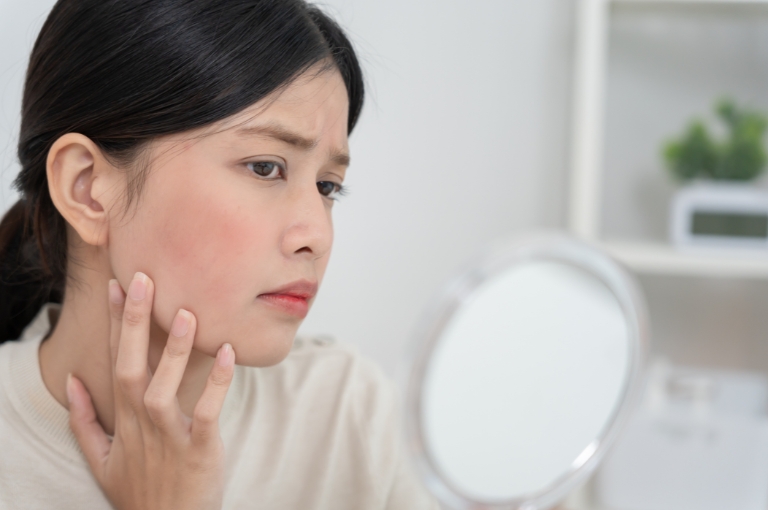
At its core, rosacea is a disease of immune dysregulation. The innate immune system in rosacea patients is predisposed to excessive inflammatory responses. Cathelicidin, an antimicrobial peptide normally present in the skin, is found at abnormally high levels in rosacea and is processed into inflammatory fragments that promote redness, swelling, and blood vessel growth. Environmental triggers (UV exposure, heat, stress, certain foods) activate this inflammatory cascade in susceptible individuals, producing the characteristic flares.
Hormonal fluctuations play a significant role in rosacea flares, particularly in women. Estrogen influences vascular tone and immune function, and shifts during the menstrual cycle, perimenopause, and menopause can worsen flushing, redness, and inflammatory breakouts. The association between rosacea and female hormonal imbalance has been documented in population studies. Stress hormones (cortisol) also contribute by amplifying the inflammatory response and disrupting gut barrier integrity.
Certain foods and beverages are well-established rosacea triggers, including alcohol (especially red wine), hot beverages, spicy foods, histamine-rich foods, and dairy. Beyond these known triggers, underlying food sensitivities (IgG/IgA mediated delayed reactions) can maintain chronic low-grade inflammation that keeps the immune system in a state of hyperreactivity. Identifying and removing these hidden triggers through comprehensive testing often produces meaningful improvement in patients whose rosacea has not responded to conventional approaches.
Rosacea symptoms vary by subtype and severity but commonly include persistent central facial redness (cheeks, nose, chin, forehead) that may worsen with triggers, frequent flushing or blushing episodes, visible small blood vessels (telangiectasia) on the face, acne-like bumps and pustules that may come and go in cycles, a burning, stinging, or hot sensation on the skin, dry, rough, or scaling patches, facial swelling, skin sensitivity and intolerance to many skincare products and cosmetics, and in advanced cases, thickening of the skin (particularly on the nose). Ocular rosacea adds eye dryness, grittiness, burning, tearing, redness, and sensitivity to light. Many patients also report that rosacea significantly affects their self-confidence and emotional well-being.
Rosacea is most commonly diagnosed in women over 30 with fair skin, though it can affect anyone. Risk is higher if you have a family history of rosacea (genetic predisposition is well documented), are of Northern European or Celtic descent, experience frequent flushing or blushing, have a history of gastrointestinal conditions (IBS, SIBO, H. pylori, celiac disease, or inflammatory bowel disease), have hormonal imbalances (particularly perimenopausal or menopausal women), are under chronic stress, have a history of heavy antibiotic use (which disrupts the gut microbiome), or have significant sun exposure history.

At Vitality Family Health, we treat rosacea as a systemic inflammatory condition, not just a skin problem. We address the visible symptoms while simultaneously investigating and treating the internal drivers.
Given the strong gut-skin axis in rosacea, gut evaluation is often the most foundational step in our workup. This may include SIBO breath testing (hydrogen and methane), comprehensive stool analysis to evaluate the gut microbiome, H. pylori testing, food sensitivity panels (IgG/IgA), celiac screening, and markers of intestinal permeability. If SIBO, H. pylori, or significant dysbiosis is identified, targeted treatment of the gut can produce dramatic and lasting improvement in the skin.
We work with you to identify both the known dietary triggers (alcohol, spicy foods, hot beverages, histamine-rich foods) and the hidden food sensitivities that may be maintaining chronic inflammation. An anti-inflammatory eating plan, combined with targeted elimination based on testing results, is one of the most impactful interventions for many rosacea patients. We provide practical, sustainable guidance that fits your life.
For women whose rosacea flares correlate with hormonal shifts, we evaluate estrogen, progesterone, testosterone, cortisol patterns, and thyroid function. Restoring hormonal balance, particularly during perimenopause and menopause, can significantly reduce the frequency and severity of rosacea flares.
We evaluate inflammatory markers and support immune regulation through targeted supplementation (omega-3 fatty acids, vitamin D, zinc, probiotics), stress management, sleep optimization, and gut restoration. Calming the systemic inflammatory response reduces the immune hyperreactivity that drives rosacea flares.
We do not dismiss topical treatments. For acute flares or persistent symptoms, topical medications (azelaic acid, metronidazole, ivermectin) can provide meaningful relief while root-cause interventions take effect. When oral medication is indicated, we use it thoughtfully and pair antibiotics with probiotics to protect the gut microbiome. Our goal is to reduce your reliance on medications over time by addressing the underlying drivers.
We help you identify your personal triggers (sun, heat, cold, wind, stress, skincare products, exercise intensity) and develop practical strategies for managing them. We also provide guidance on gentle, rosacea-friendly skincare routines and sun protection strategies that minimize irritation while supporting skin barrier health.
Rosacea is a chronic condition, not a medical emergency. However, certain symptoms warrant prompt attention. See your provider if rosacea symptoms suddenly worsen or change in character, you develop eye symptoms (pain, vision changes, persistent redness or dryness) that may indicate ocular rosacea, a skin lesion changes in appearance and does not resemble your typical rosacea pattern (to rule out other conditions), you develop a severe reaction to a topical or oral medication, or you notice signs of a secondary skin infection (increased warmth, spreading redness, pus, fever).
If you are currently using topical steroids on your face, it is important to discuss this with your provider. Topical steroids can initially improve rosacea symptoms but frequently cause rebound worsening and can permanently thin the skin with prolonged use. Never start or stop medications without consulting your clinician.
No. Rosacea is not caused by poor hygiene or inadequate skincare. It is a chronic inflammatory condition driven by immune dysregulation, genetic predisposition, gut health imbalance, environmental triggers, and hormonal factors. Aggressive cleansing or harsh skincare products can actually worsen rosacea by damaging the skin barrier.
Rosacea is a chronic condition, and there is no definitive cure. However, it can be managed very effectively. By identifying and addressing the root causes (gut health, food sensitivities, hormonal imbalances, immune dysregulation), many patients achieve significant, long-lasting improvement and dramatically fewer flares. Some patients who address underlying SIBO or gut dysbiosis experience complete remission of skin symptoms.
Research has established a strong gut-skin axis in rosacea. Rosacea patients have significantly higher rates of SIBO, H. pylori infection, IBS, and inflammatory bowel disease. One study found rosacea patients were 13 times more likely to have SIBO than controls, and treating SIBO led to clinical remission of rosacea in nearly all affected patients. The gut microbiome influences immune function, inflammation, and neurovascular signaling, all of which are central to rosacea pathophysiology.
Oral antibiotics like doxycycline can reduce rosacea symptoms in the short term by suppressing inflammation. However, they do not address the underlying cause, symptoms often return when the medication is stopped, and prolonged antibiotic use disrupts the gut microbiome, which may worsen the gut-skin imbalance driving the condition. We use antibiotics judiciously and always pair them with gut-protective strategies when they are needed.
Yes. Beyond the well-known dietary triggers (alcohol, spicy food, hot beverages), hidden food sensitivities (IgG/IgA mediated delayed reactions) can maintain chronic low-grade inflammation that keeps the immune system primed for flares. Comprehensive food sensitivity testing can identify these hidden triggers, and removing them from the diet often produces meaningful improvement in skin symptoms.
Yes. Hormonal fluctuations, particularly declining estrogen during perimenopause and menopause, can worsen flushing, redness, and inflammatory breakouts. Stress hormones (cortisol) also amplify the inflammatory response. Evaluating and addressing hormonal imbalances is an important component of comprehensive rosacea management, particularly for women whose flares correlate with their cycle or menopausal transition.
Yes. We coordinate with dermatologists when specialized skin procedures (laser treatments, IPL therapy) or advanced topical management is needed. Our role is to address the internal contributors to rosacea that dermatology alone does not typically evaluate, creating a comprehensive approach that addresses both the surface and the source.
Yes. Lab result reviews, dietary counseling, supplement guidance, and follow-up visits can be conducted via telehealth for patients throughout the state of Illinois. Initial evaluations and certain testing may benefit from an in-person visit at our Oak Brook office.
The discovery consult is a brief, no-cost conversation where you can share what you have been experiencing with your skin, ask questions about our approach, and find out whether Vitality Family Health is the right fit. We will listen, discuss your situation, and outline what a comprehensive evaluation might look like. There is no pressure and no obligation.
You may also want to read about Gut and Digestive Disorders, Hormone Imbalances, Eczema, Asthma, and Allergies, Anxiety and Depression, and On-Site Lab Work, since the gut health, hormonal, and immune factors that drive rosacea are deeply connected to these areas of care.
Medically Reviewed By: Dr Kori Feldman, M.D.
Vitality Family Health & Wellness Partners is located in Oak Brook, Illinois, and serves patients throughout the Greater Chicagoland Area and the entire state of Illinois. These areas include but are not limited to the downtown Chicago area, surrounding suburbs, central, northern, and southern Illinois, and southern Wisconsin and Northwest Indiana.