

Minor injuries are a fact of life, especially for active families. A child falls on the playground and splits a chin. A kitchen knife slips. A scrape needs more than a bandage but less than an ER visit. Or you have sutures or staples from a recent procedure that need to be removed safely and on schedule. These are the everyday moments when having a primary care provider who can see you quickly and handle the situation in-office makes all the difference.
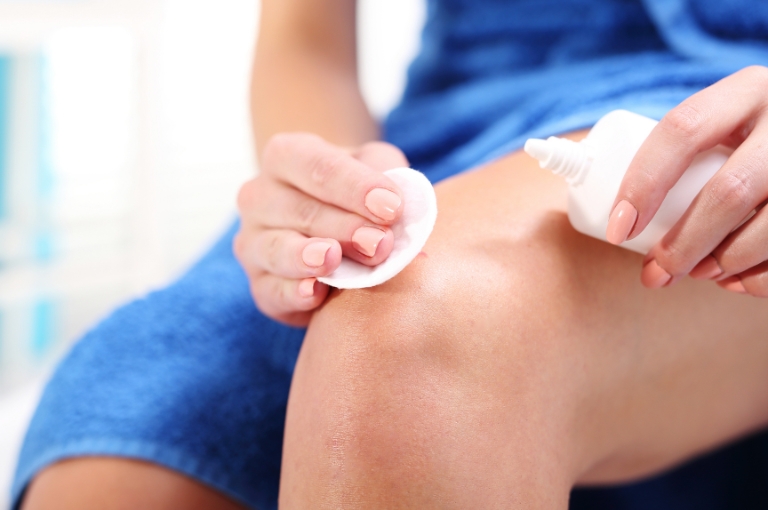
At Vitality Family Health in Oak Brook, IL, we provide minor wound care services for both children and adults, including wound assessment and cleaning, Dermabond (medical skin adhesive) for appropriate lacerations, wound closure guidance, and suture and staple removal. These services are available as part of our primary care practice, which means you can be seen by a provider who knows your medical history, your allergies, and your medications rather than starting from scratch at an unfamiliar urgent care clinic.
Dermabond is a medical-grade skin adhesive (topical tissue adhesive) that is used to close small, clean wounds without the need for traditional sutures or stitches. It works by forming a strong, flexible bond across the wound edges, holding the skin together while the body heals naturally underneath. Dermabond is commonly used for small cuts on the face, scalp, torso, and extremities, particularly in situations where the wound is clean, the edges come together easily, and the location is not over a joint or high-tension area.
For many minor lacerations, Dermabond offers significant advantages over traditional sutures. Application is quick and virtually painless, which is especially important for children. There are no needles, no stitches to remove later, and the adhesive naturally sloughs off on its own as the wound heals, typically within five to ten days. The result is often a cosmetically favorable outcome with less scarring than traditional stitches for appropriate wounds.
Not every wound is a candidate for Dermabond. Deep lacerations, wounds with jagged or irregular edges, bites, puncture wounds, wounds that are contaminated or showing signs of infection, and cuts over joints or areas of high movement may require a different approach. Our providers assess each injury individually and recommend the wound closure method that will give you the safest, best-healing result.
Before any wound closure, your provider will thoroughly evaluate the injury. This includes assessing the depth, length, location, and cleanliness of the wound, checking for signs of infection, evaluating whether deeper structures (tendons, nerves, blood vessels) may be involved, and determining the best method of closure. We clean and irrigate the wound to reduce infection risk and ensure optimal healing conditions.
If the wound is beyond what can be safely managed in a primary care setting, such as a deep laceration that requires layered closure, an injury involving significant nerve or tendon damage, or a wound that requires imaging to rule out a fracture, we will refer you promptly to the appropriate specialist or emergency department. We never attempt to manage an injury that requires a higher level of care, and we are transparent about the limitations of what can be safely treated in our office.
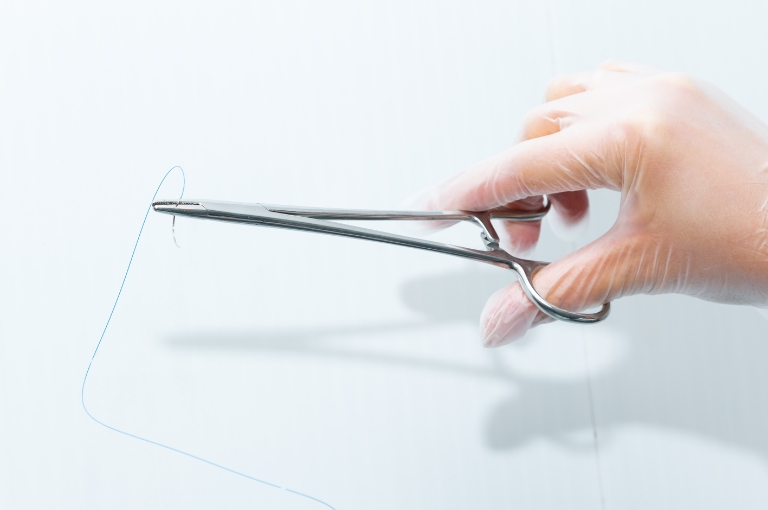
If you or your child has received sutures (stitches) or staples from an emergency room visit, urgent care center, surgical procedure, or another provider, our office can safely remove them at the appropriate time. Suture and staple removal is a quick, straightforward procedure, but timing matters. Removing them too early can result in the wound reopening, while leaving them in too long can increase the risk of scarring or skin irritation.
Typical removal timelines vary by location: facial sutures are often removed in five to seven days, while sutures on the torso or extremities are typically removed in seven to fourteen days. Staples are generally removed within seven to ten days, depending on the wound and location. Your provider will assess the wound at the time of removal to confirm it has healed sufficiently, check for any signs of infection, and provide aftercare instructions to support continued healing and minimize scarring.
Proper aftercare is essential for optimal healing and minimal scarring. After any wound closure or suture/staple removal, we provide clear, detailed instructions on how to care for the wound at home, including keeping the area clean and dry, when it is safe to get the area wet, signs of infection to watch for (increasing redness, swelling, warmth, drainage, or fever), activity restrictions if applicable, and when to follow up. For patients concerned about scarring, we can also discuss strategies to promote the best possible cosmetic outcome as the wound heals.
Does your child have a cut that needs more than a bandage but probably does not need an emergency room visit?
Did you get stitches or staples at the ER and now need them removed but do not want to go back to the hospital?
Are you looking for a provider who can handle minor wounds quickly and gently, especially for kids who are nervous about needles?
Do you want wound care from someone who already knows your medical history rather than an unfamiliar urgent care provider?
Are you unsure whether your cut needs professional attention or can heal on its own?
Not every cut requires medical attention, but some do. As a general guide, you should have a wound evaluated by a provider if the cut is deeper than a superficial scrape, the wound edges do not come together on their own with light pressure, bleeding does not stop after 10 to 15 minutes of direct pressure, the wound is on the face (where cosmetic healing is a priority), the cut was caused by a dirty or rusty object and your tetanus vaccination may not be current, there are signs of infection (redness spreading beyond the wound edges, increasing pain, warmth, swelling, pus, or fever), or the wound was caused by an animal or human bite.
When in doubt, consult our office. We can help you determine over the phone whether the injury needs to be seen in person and how urgently.
Minor wound care is safe and routine when performed by a trained provider. However, certain injuries require emergency medical attention. Call 911 or go to the nearest emergency room if: the wound is deep and bleeding heavily or will not stop bleeding with firm, direct pressure, the wound involves a major blood vessel (spurting or pulsing blood), a body part has been partially or fully amputated, there is significant loss of function (inability to move fingers, toes, or a limb beyond the injury), you suspect a broken bone beneath the wound, the wound was caused by a high-velocity mechanism (power tool, machinery, gunshot), there are signs of a severe infection (red streaking away from the wound, high fever, rapid heart rate, confusion), or the person shows signs of shock (pale skin, rapid breathing, dizziness, loss of consciousness).
If you are unsure whether your injury is appropriate for our office or requires the emergency room, contact us. We can help you make that determination quickly.
Dermabond is a medical-grade skin adhesive (essentially a strong, sterile glue) that is applied to the surface of a clean wound to hold the edges together while the body heals underneath. It creates a flexible, waterproof seal, eliminates the need for stitches in appropriate wounds, and falls off naturally as the skin heals, typically within five to ten days. It is particularly well-suited for small, clean cuts on the face, scalp, torso, and limbs.
No. Dermabond works best for small, clean lacerations where the wound edges come together easily and the area is not over a joint or under significant tension. Deep cuts, jagged wounds, bites, puncture wounds, wounds showing signs of infection, and cuts in areas of high movement may require sutures or another approach. Your provider will evaluate the wound and recommend the best closure method for your specific injury.
Application of Dermabond is virtually painless. There may be a brief warming sensation as the adhesive sets, but there are no needles, no injections, and no stitches involved. This makes it an especially good option for children who are anxious about wound care.
Timing depends on the location and type of wound. Facial sutures are typically removed in five to seven days. Sutures on the body or extremities are usually removed in seven to fourteen days. Staples are generally removed within seven to ten days. Your provider or the provider who placed them should give you specific guidance. If you are unsure, contact our office and we will help you determine the right timing.
Yes. If you received sutures or staples at an emergency room, urgent care center, surgical facility, or another provider, you can absolutely come to our office for removal. We will assess the wound, confirm it has healed appropriately, remove the sutures or staples safely, and provide aftercare instructions.
Yes. We treat both children and adults for minor lacerations, cuts, and scrapes. Dermabond is particularly popular for pediatric wound care because it is painless and avoids the anxiety associated with needles and stitches. We take a gentle, patient approach with every child.
We offer same-day and next-day appointments for minor injuries and acute care needs. Contact our office as soon as possible after the injury occurs so we can schedule you promptly. For questions about whether a wound needs to be seen, we can often provide guidance over the phone.
Minor wound care services, including Dermabond application and suture/staple removal, are available to members of our practice. If you are not currently a member, we invite you to schedule a discovery consult to learn about our membership model and how it provides access to same-day care, on-site services, and a provider who knows your family.
The discovery consult is a brief, no-cost conversation where you can ask questions about our practice, our services, and whether Vitality Family Health is the right fit for your family. If we are a good match, we will walk you through the next steps to become a member. There is no pressure and no obligation.
You may also want to read about Acute and Sick Care Visits, Annual Well Checkups, School and Work Physicals, and Our Approach, since minor wound care is one of the many in-office services we provide as part of comprehensive primary care for individuals and families.
Medically Reviewed By: Dr Kori Feldman, M.D.
Vitality Family Health & Wellness Partners is located in Oak Brook, Illinois, and serves patients throughout the Greater Chicagoland Area and the entire state of Illinois. These areas include but are not limited to the downtown Chicago area, surrounding suburbs, central, northern, and southern Illinois, and southern Wisconsin and Northwest Indiana.