

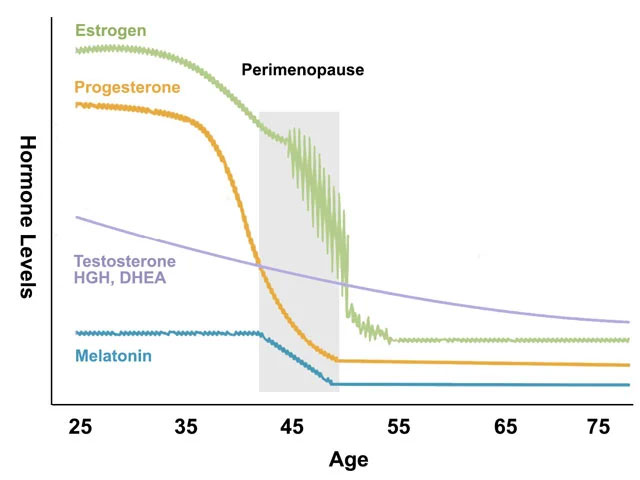
Perimenopause is the transition period before menopause when your ovaries gradually produce less estrogen and progesterone.
This phase typically begins in your 40s but can start earlier, lasting anywhere from 2-10 years. Menopause is officially reached when you've gone 12 consecutive months without a period, usually around age 51. Postmenopause is the phase after menopause.
These aren't just about periods stopping–they're profound metabolic and physiological shifts affecting virtually every system in your body.
Declining estrogen and progesterone impact: metabolism and weight regulation, sleep architecture and circadian rhythm, brain chemistry and cognitive function, bone density and joint health, cardiovascular health and cholesterol, skin elasticity and collagen production, mood regulation and stress response, vaginal and urinary tract health, and body temperature regulation.
At Vitality Family Health, we take a comprehensive approach that may include bioidentical hormone replacement therapy (BHRT) when appropriate, combined with functional medicine interventions that optimize your overall health.
For women who can use BHRT, it often provides powerful symptom relief while we simultaneously address other factors–nutrition, gut health, inflammation, mitochondrial function, and stress resilience–that determine how well you feel.
For women who cannot or prefer not to use hormones, we offer effective natural alternatives using peptides, targeted nutrition, and holistic therapies.
The result? Whether using BHRT or natural approaches, women experience significant symptom relief and often feel better than they did in their 30s–more energy, mental clarity, stable weight, and vitality. This comprehensive approach creates lasting wellness, not just symptom management.
Every woman's experience is different, but these are the most common challenges we help resolve:
Vasomotor Symptoms: Hot flashes and night sweats are caused by fluctuating estrogen affecting your hypothalamus (your body's temperature control center). We address these through targeted supplements, peptides that support temperature regulation, adrenal support to reduce stress-triggered flashes, and dietary strategies that reduce inflammatory triggers.
Sleep Disruption: Declining progesterone (which has sleep-promoting GABA-like effects) combined with night sweats creates insomnia. We restore sleep through neurofeedback, sleep-supporting peptides like Epithalon, magnesium and other nutrients, stress and cortisol regulation, and gut healing to support neurotransmitter production.
Weight Gain & Metabolic Changes: Declining estrogen shifts fat storage to your midsection, slows metabolism, and increases insulin resistance. We reverse this through mitochondrial optimization with peptides like MOTS-C, targeted nutrition and intermittent fasting protocols, gut microbiome support for metabolism, inflammation reduction, and metabolic testing to identify specific imbalances.
Brain Fog & Memory Issues: Estrogen affects neurotransmitters, blood flow to the brain, and mitochondrial function in brain cells. We enhance cognition through neuroprotective peptides (Semax, Selank), mitochondrial support for brain energy, inflammation reduction, B vitamins and other brain-supporting nutrients, and lifestyle strategies for cognitive optimization.
Mood Changes: Anxiety, irritability, and depression result from neurotransmitter shifts, HPA axis dysregulation, and inflammation. We stabilize mood through gut healing (95% of serotonin is produced in the gut), stress and cortisol regulation, anti-anxiety peptides without sedation, nutritional support for neurotransmitter synthesis, and nervous system regulation techniques.
Low Energy & Fatigue: Mitochondrial dysfunction, thyroid changes, adrenal strain, and poor sleep create exhaustion. We restore energy through comprehensive mitochondrial optimization, thyroid support when indicated, adrenal restoration, IV nutritional therapy, and sleep optimization.
Joint Pain & Muscle Aches: Estrogen affects collagen production and inflammation. We reduce pain through anti-inflammatory nutrition, regenerative peptides like BPC-157, targeted supplements, gut healing to reduce systemic inflammation, and addressing underlying nutrient deficiencies.

For women who are candidates, bioidentical hormones (BHRT) offer powerful symptom relief and long-term protective benefits. Unlike synthetic hormones, bioidentical hormones are molecularly identical to what your body produces, offering better tolerability and safety.
BHRT may include estrogen to relieve hot flashes, support sleep, cognition, bone density, and cardiovascular health; progesterone to calm the nervous system, balance estrogen, and stabilize mood; and testosterone to restore libido, energy, muscle mass, and mental clarity.
Every protocol is customized to your symptoms, labs, and medical history, using the lowest effective dose, monitored closely, and adjusted as needed.
Who is a candidate for BHRT: Women with moderate to severe menopause symptoms affecting quality of life, no personal history of breast cancer or blood clots, no active cardiovascular disease or stroke history, and preferably starting within 10 years of menopause onset for optimal cardiovascular benefit.
Even if you're a candidate for BHRT, we still address nutrition, gut health, mitochondrial function, and lifestyle factors–hormones work best when your body is functioning optimally.
Natural alternatives for women who cannot use BHRT: For women with contraindications or personal preference against hormone therapy, we offer highly effective natural approaches detailed in other sections including peptides, phytoestrogens, targeted nutrition, mitochondrial optimization, and more. Many women achieve excellent symptom relief without hormones.
We start by understanding your unique hormonal picture and identifying other factors affecting your symptoms: sex hormones (estrogen, progesterone, testosterone, DHEA) to understand your baseline, thyroid comprehensive panel (TSH, Free T3, Free T4, antibodies), adrenal function and cortisol rhythm (4-point salivary testing), metabolic markers (insulin, glucose, HbA1c, lipids), inflammatory markers (hsCRP, homocysteine), nutrient deficiencies (vitamin D, B12, magnesium, omega-3s), and gut health assessment when indicated.
This data reveals why you're experiencing specific symptoms and guides personalized treatment.
Targeted peptides offer powerful support during hormonal transitions. MOTS-C combats weight gain and boosts energy and metabolism. Epithalon regulates sleep and circadian rhythm. Selank and Semax sharpen focus and stabilize mood without sedation. BPC-157 heals the gut and repairs tissue.
Thymosin Alpha-1 calms systemic inflammation. GHK-Cu restores collagen and skin elasticity. Every peptide protocol is customized to your symptoms and adjusted as your needs evolve.
Declining hormones affect mitochondrial function, slowing metabolism and energy production. We restore cellular energy through: targeted supplementation (CoQ10, PQQ, NAD+ precursors, alpha-lipoic acid), peptides that enhance mitochondrial biogenesis.
IV nutritional therapy delivering high-dose cellular nutrients, intermittent fasting protocols that stimulate mitochondrial health and fat metabolism, and exercise strategies that optimize metabolic function. Women often notice dramatic energy improvements and easier weight management as mitochondrial function is restored.
Your body's nutritional needs shift significantly during perimenopause and menopause. The way you ate in your 20s and 30s simply won't work the same way anymore. Declining estrogen changes how your body processes food, maintains muscle and bone density, regulates blood sugar, and even how well you sleep.
We help you adapt your nutrition to what your body actually needs now: the right proteins and nutrients to prevent muscle and bone loss, eating patterns that stabilize blood sugar and reduce weight gain around the abdomen, foods and timing strategies that support better sleep, and an anti-inflammatory approach that can meaningfully reduce hot flashes, joint pain, and brain fog. Optimal nutrition also enhances how your body absorbs and processes hormones.
Your gut microbiome plays a crucial role in hormone metabolism, neurotransmitter production, and inflammation–all of which affect menopause symptoms.
We address: estrobolome dysfunction (gut bacteria that metabolize estrogen), intestinal permeability ("leaky gut") driving inflammation, dysbiosis affecting serotonin and GABA production, nutrient malabsorption worsening deficiencies, and constipation preventing proper hormone clearance.
Healing the gut through targeted protocols improves hormone balance, reduces inflammation, enhances mood and sleep, and supports healthy weight management.
Your adrenal glands take over some hormone production after menopause, but chronic stress depletes them.
We restore adrenal health through: adaptogenic herbs (ashwagandha, rhodiola) that modulate stress response, adrenal-supporting nutrients, HPA axis restoration, stress management techniques and nervous system regulation, sleep optimization (critical for adrenal recovery), and peptides that support stress resilience.
Healthy adrenals mean better energy, reduced hot flashes, improved sleep, and easier weight management.
Most protocols involve an initial intensive phase (first 3-4 months) with frequent treatments and close monitoring, followed by maintenance phase with less frequent interventions and ongoing lifestyle support. For women using BHRT, hormone levels are monitored closely with testing at 6-8 weeks and adjustments as needed. You'll track symptoms weekly to monitor progress.
Many women notice improvements within 2-4 weeks–reduced hot flash frequency and intensity, better sleep quality, improved energy, mental clarity returning, mood stabilization. Continued optimization over 3-6 months creates lasting transformation.
Daily habits profoundly influence menopause symptoms: Sleep optimization through circadian rhythm alignment, temperature regulation, and sleep hygiene; Stress management including breathwork, meditation, and vagal tone exercises that reduce hot flash frequency.
Movement that supports metabolism, bone density, and mood without overtaxing stressed systems; Community and connection which buffer stress and improve outcomes; and Mind-body practices that regulate nervous system and reduce symptom severity. We provide personalized coaching to implement these strategies sustainably.
You're an ideal candidate if:
Whether you use BHRT or prefer natural approaches, our comprehensive functional medicine support optimizes your entire system so you feel vibrant and energized during and after this transition.
Your evaluation includes: detailed symptom tracking and menstrual history, comprehensive hormone testing (sex hormones, thyroid, adrenal), metabolic and inflammatory markers, nutritional deficiencies, gut health evaluation when indicated, lifestyle analysis (diet, sleep, stress, exercise), family and personal medical history (to determine BHRT candidacy), and personal health goals and preferences.
This creates your personalized roadmap.
Based on your assessment, we will design your customized plan which may include: bioidentical hormone replacement therapy (if you're a candidate and choose this option), targeted peptides for specific symptoms, mitochondrial and metabolic optimization.
IV nutritional therapy to address deficiencies, gut healing protocols when indicated, adrenal restoration and stress support, personalized nutrition plan, supplement protocol, and lifestyle modifications with health coaching. Your protocol evolves as symptoms improve and needs change.
Nutrient deficiencies worsen menopause symptoms and are common due to dietary inadequacy, gut malabsorption, and increased metabolic demands. IV therapy provides: magnesium for nervous system calming, sleep support, and hot flash reduction.
B vitamins for energy production, mood stability, and stress response, vitamin C for adrenal support and collagen production, amino acids for neurotransmitter synthesis, glutathione for detoxification and cellular protection, and targeted minerals for bone health and metabolic function.
High-dose IV delivery bypasses absorption issues and provides immediate symptom relief while addressing underlying deficiencies.
Weeks 2-4: Initial symptom improvements–reduced hot flash frequency, better sleep, slight energy increase, and mood beginning to stabilize.
Weeks 6-8: Noticeable changes–significant reduction in hot flashes and night sweats, consistently better sleep quality, improved energy throughout the day, mental clarity returning, reduced anxiety and mood swings, and easier time managing stress.
Months 3-4: Substantial improvements–hot flashes minimal or resolved, restorative sleep without disruption, stable energy and no afternoon crashes, clear thinking and good memory, positive mood and emotional stability, weight beginning to stabilize or decrease, and reduced joint pain and inflammation.
Months 6+: Thriving through transition–sustained symptom relief, healthy weight and body composition, vibrant energy and vitality, sharp cognition, emotional resilience and well-being, and strong foundation for long-term health.
Results vary based on symptom severity, adherence to protocols, and individual factors. Women who fully engage with nutrition and lifestyle changes alongside therapies typically experience the most dramatic improvements.

You don't have to suffer through menopause or settle for "just getting through it." With the right support,whether using BHRT, natural approaches, or both, you can feel energized, clear-headed, and vibrant during and after this transition.
BHRT may not recommended if you have: personal history of breast cancer or estrogen-sensitive cancers, history of blood clots, stroke, or pulmonary embolism, active cardiovascular disease, active liver disease, undiagnosed vaginal bleeding, or pregnancy. BHRT requires careful evaluation if you have: family history of breast cancer (may still be candidate with careful monitoring), history of endometriosis or uterine fibroids (may worsen with estrogen), migraine with aura (stroke risk consideration), gallbladder disease, or strong personal preference against hormone therapy.
Natural alternatives (peptides, nutrition, functional medicine) are appropriate for nearly all women and don't carry the contraindications of hormone therapy. General contraindications include pregnancy, active cancer or recent treatment, severe uncontrolled medical conditions, active infection, or allergy to specific treatment components.
Perimenopause is the transition (often mid-40s, sometimes earlier) where estrogen and progesterone fluctuate and cycles become irregular. Menopause is confirmed after 12 straight months without a period; ovaries have largely stopped releasing eggs and estrogen levels are consistently low.
Sex hormones influence brain, sleep, metabolism, temperature regulation, pelvic tissues, and immune signaling. Fluctuations can show up as hot flashes, night sweats, mood shifts, brain fog, sleep disruption, weight gain, vaginal dryness, and urinary issues—even when routine labs look “normal.”
Foundations (sleep, nutrition, resistance training, alcohol moderation, stress skills) help a lot—especially for weight, sleep, and mood. But moderate–severe vasomotor symptoms (VMS) or genitourinary syndrome of menopause (GSM) often respond best to evidence-based hormone therapy, with lifestyle as the base.
Many FDA-approved products are bioidentical (e.g., 17-β estradiol, micronized progesterone). “Compounded bioidentical” is different: it’s custom-mixed and not FDA-approved; major societies advise using FDA-approved options first unless there’s a specific need to compound.
If you still have a uterus, yes—adequate progestogen (often micronized progesterone) protects the endometrium. If you’ve had a hysterectomy, estrogen alone may be appropriate.
Transdermal estradiol (patch/gel/spray) avoids first-pass liver metabolism and is often preferred for women with metabolic risk, migraine with aura, or higher VTE risk. Oral is reasonable in low-risk patients who prefer it.
Hot flashes often improve within 2–4 weeks, with full benefit by ~8–12 weeks. Sleep, mood, and sexual comfort can improve over weeks to a few months when the plan (and dose) are right.
Hormone replacement therapy isn’t a weight-loss drug, but it can reduce sleep fragmentation and VMS that drive overeating, and it may help limit central fat gain when combined with training and nutrition.
Best benefit–risk tends to be within 10 years of menopause onset or before age 60 (“window of opportunity”). Starting later can still be considered case-by-case, but cardiovascular and thrombotic risks need closer review.
Yes—SSRIs/SNRIs, gabapentin, oxybutynin, and the neurokinin-3 antagonist fezolinetant are evidence-based options for VMS when HT isn’t desired or appropriate; vaginal moisturizers/lubricants and local therapies help GSM.
You may also want to read about Hypothyroidism, Gut Health, Thyroid Imbalances, Anxiety & Depression, and Sleep Issues, since these areas often overlap with chronic fatigue and may be contributing to your symptoms.
Medically Reviewed By: Dr Kori Feldman, M.D.
Vitality Family Health & Wellness Partners is located in Oak Brook, Illinois, and serves patients throughout the Greater Chicagoland Area and the entire state of Illinois. These areas include but are not limited to the downtown Chicago area, surrounding suburbs, central, northern, and southern Illinois, and southern Wisconsin and Northwest Indiana.